
Labs
Our labs combine advanced nanofabrication, cryogenics, and microwave measurements and scanning probe to study quantum transport, superconductivity, and topological devices.
Microwave
setup (Bluefors)
setup (Bluefors)
Quantum
transport setups
transport setups
van der Waals
transfer station
transfer station
Deposition tool
for superconductors
for superconductors
Highlights
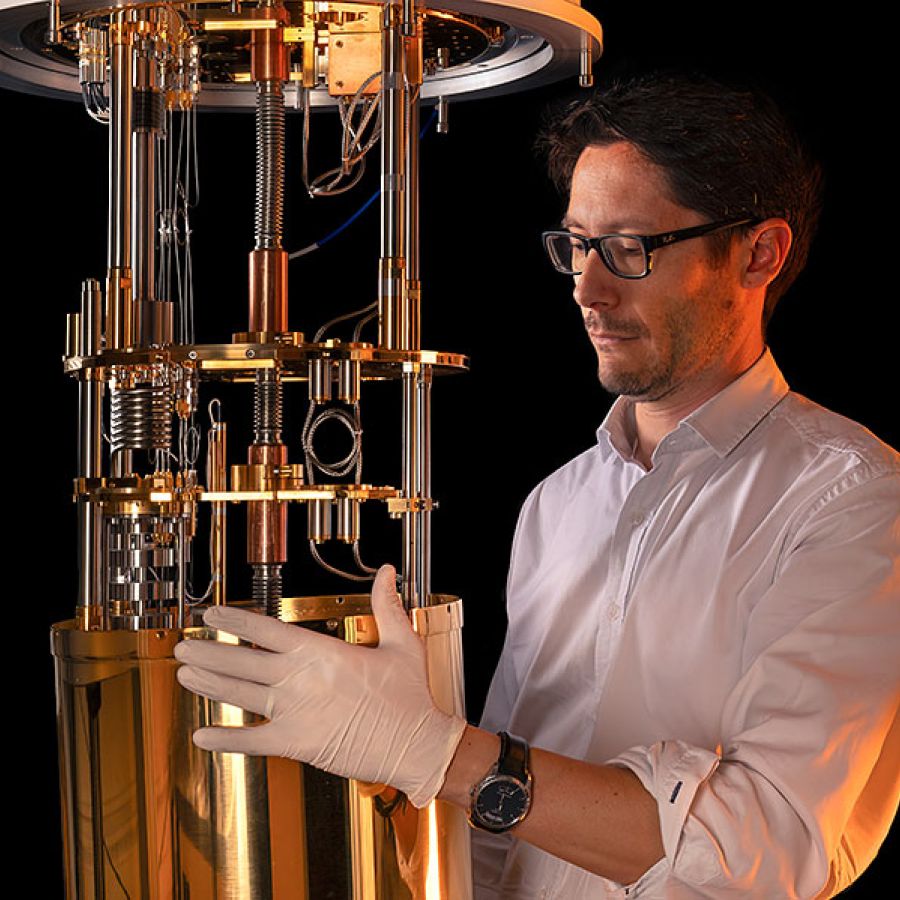
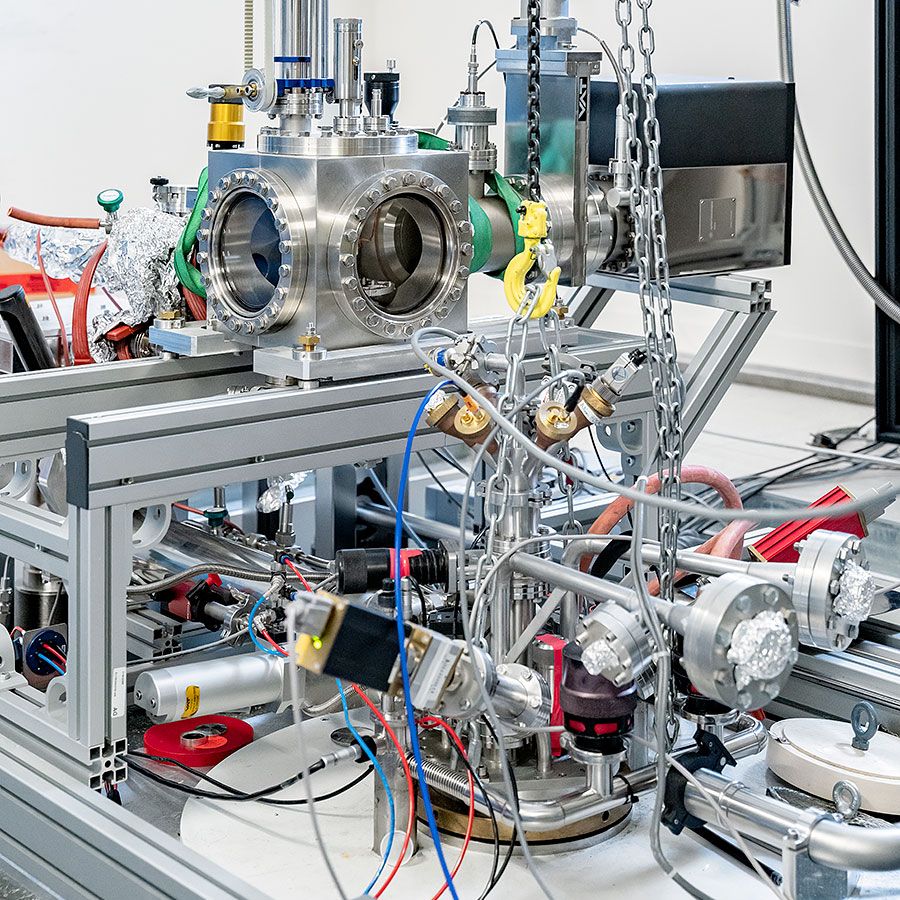
Microwave setup (Bluefors)
This refrigerator is dedicated to combined microwave and quantum-transport measurements. It is equipped with two cryogenic low-noise amplifiers (LNAs) covering 0.02–2 GHz and 4–8 GHz, suitable for experiments on superconducting circuits, resonators, and qubits.
Quantum transport setups (4 dilution refrigerators)
Our quantum transport platform includes three dilution refrigerators. The workhorse system reaches 9 mK, with heavily filtered DC lines and an 18 T magnet. The diluette is an ultra-compact fridge with a 40 mK base temperature; it offers very short cooldowns and a 16 T magnet. A sub-10 mK system is being installed and will be dedicated to entropy and noise measurements up to 16 T.
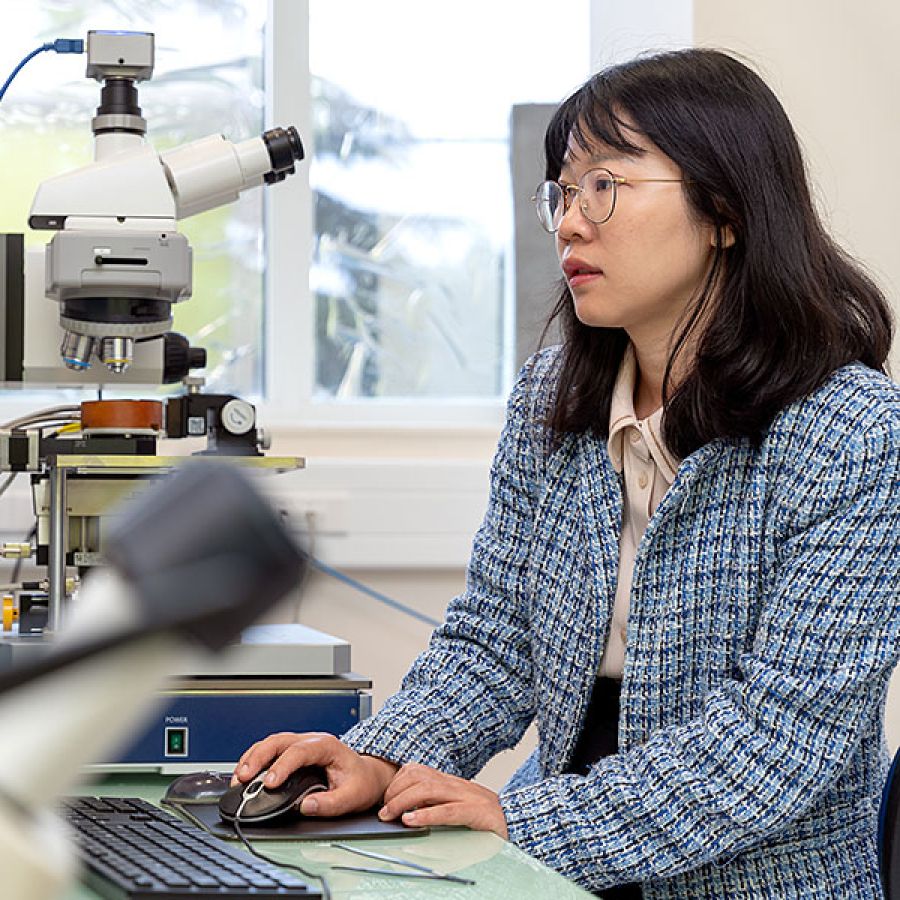
van der Waals transfer station
This microscope-assisted station is essential for van der Waals assembly of 2D materials. Built in-house by D. Dufeu, it is shared with the Quant2M team.
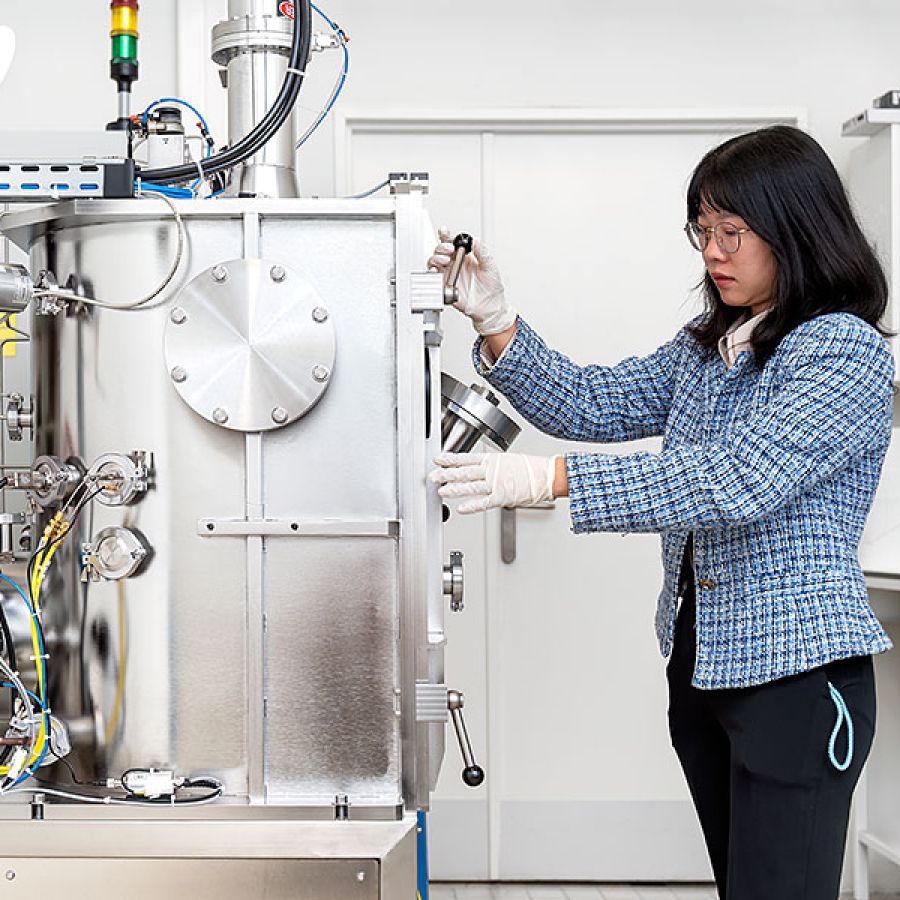
Deposition tool for (disordered) superconductors
Our newly commissioned e-beam evaporator, dedicated to both disordered and conventional superconductors, enables new microwave circuits that combine high-inductance materials with conventional aluminum devices. Features include angle evaporation (tilt and planetary rotation), argon milling, dynamic and static oxidation via a dedicated O₂ shower, and a nitrogen-cooled sample holder, with a base pressure in the low 10⁻⁸ mbar range.
Low-temperature scanning probes (STM & SGM)
Our scanning-probe activity relies on two state-of-the-art low-temperature microscopes:
(i) a 300 mK Scanning Gate Microscope (SGM) with an 8 T solenoid, dedicated to imaging electron flow in semiconductors and probing correlated states such as the Kondo cloud;
(ii) a 20 mK / 14 T Scanning Tunneling Microscope (STM) with a 104 mm cold-bore solenoid. The hybrid STM/AFM head uses a Pt/Ir tunneling tip mounted on a tuning-fork force sensor and targets mesoscopic devices. This instrument enables studies of SU(4) symmetry-breaking phases in graphene’s zeroth Landau level and tunneling spectroscopy of quantum Hall edge channels.