
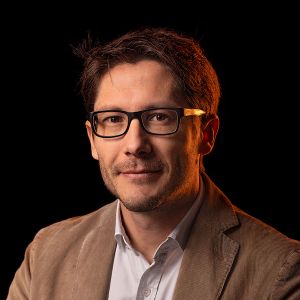
Benjamin Sacepe
Benjamin Sacépé is a CNRS physicist at Institut Néel (Grenoble) leading the QuNES team. His group investigates fundamental condensed-matter physics in low-dimensional systems: interaction-driven quantum Hall phases in graphene, gate-tunable helical edge channels, chiral quantum Hall Josephson effects at high magnetic field, interplay between superconductivity and disorder, and the microscopic origins of microwave dissipation in superconducting circuits. Combining advanced nanofabrication with ultra-low-noise transport and tunnelling spectroscopy, the team seeks universal principles that connect materials, topology, and coherence. Sacépé received two ERC grants (QUEST, SUPERGRAPH) and the Louis Ancel Prize of the French Physical Society (2021) for his contributions to condensed-matter physics.
Benjamin Sacépé is a quantum condensed-matter physicist at CNRS (Institut Néel, Grenoble), where he leads the QuNES (Quantum Nano-Electronics & Spectroscopy) team. His research is fundamentally driven: to uncover universal mechanisms by which interactions, disorder, and topology shape quantum phases in low-dimensional materials, and to build clean experimental platforms on which these mechanisms can be tested with high precision.
Using graphene and van der Waals heterostructures, his group develops a quantum Hall topological insulator platform with robust, gate-tunable helical edge channels for experiments on topological superconductivity. This enables controlled studies of proximity effects at the single-channel level, including chiral and helical Josephson-junction physics at high magnetic fields. In parallel, the team examines the delicate interplay between superconductivity and disorder near the superconductor–insulator transition, where a rich, unconventional phenomenology emerges—phase-dominated superconducting transitions, pseudogapped superconductivity, and localized preformed pairs. A recent focus targets microwave dissipation in disordered superconductors (granular Al, InOx, TiN, etc.), revealing universal trends that link internal quality factor to superfluid stiffness and clarifying intrinsic limits to coherence in superconducting circuits.
Experimentally, the lab integrates advanced nanofabrication with ultra-low-noise transport and local tunnelling spectroscopy. Sacépé’s work has been recognized with two ERC fundings (StG QUEST, CoG SUPERGRAPH) and the Louis Ancel Prize (2021) of the French Physical Society for outstanding contributions to condensed-matter physics. His current aim is to consolidate a reproducible, quantum Hall-based route to topological superconductivity in graphene-based hybrids, providing definitive tests of helical transport and proximity effects relevant to quantum science.